
What is Amazon Redshift?
Amazon Redshift is used to modernize data analytics workloads and deliver insights into businesses. With a fully managed, AI powered, massively parallel processing (MPP) architecture, Amazon Redshift drives business decision making quickly and cost effectively. Amazon Redshift uses SQL to analyze structured and semi-structured data across data warehouses, operational databases, and data lakes, using AWS-designed hardware and machine learning to deliver optimal performance at any scale.
Company Details
Need Assistance?
We're here to help you with understanding our reports and the data inside to help you make decisions.
Get AssistanceAmazon Redshift Ratings
Real user data aggregated to summarize the product performance and customer experience.
Download the entire Product Scorecard
to access more information on Amazon Redshift.
Product scores listed below represent current data. This may be different from data contained in reports and awards, which express data as of their publication date.
87 Likeliness to Recommend
1
Since last award
96 Plan to Renew
1
Since last award
81 Satisfaction of Cost Relative to Value
1
Since last award
Emotional Footprint Overview
Product scores listed below represent current data. This may be different from data contained in reports and awards, which express data as of their publication date.
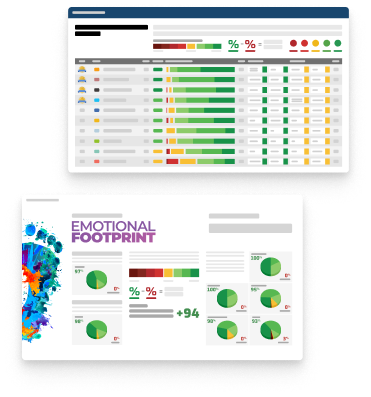
+92 Net Emotional Footprint
The emotional sentiment held by end users of the software based on their experience with the vendor. Responses are captured on an eight-point scale.
How much do users love Amazon Redshift?
Pros
- Enables Productivity
- Acts with Integrity
- Reliable
- Performance Enhancing
How to read the Emotional Footprint
The Net Emotional Footprint measures high-level user sentiment towards particular product offerings. It aggregates emotional response ratings for various dimensions of the vendor-client relationship and product effectiveness, creating a powerful indicator of overall user feeling toward the vendor and product.
While purchasing decisions shouldn't be based on emotion, it's valuable to know what kind of emotional response the vendor you're considering elicits from their users.
Footprint
Negative
Neutral
Positive
Feature Ratings
Distributed Processing
Data Security
Data Integration
Workload Management and Monitoring
Data Management
Platform Administration
Analytics and Data Science Tools
Analytics and Reporting
Real Time Capabilities
Metadata Management
Data Visualization
Vendor Capability Ratings
Ease of Implementation
Ease of IT Administration
Vendor Support
Business Value Created
Ease of Data Integration
Quality of Features
Breadth of Features
Usability and Intuitiveness
Availability and Quality of Training
Product Strategy and Rate of Improvement
Ease of Customization
Amazon Redshift Reviews

Hitesh G.
- Role: Information Technology
- Industry: Technology
- Involvement: IT Development, Integration, and Administration
Submitted Mar 2025
Amazon redshift: a great tool for data management.
Likeliness to Recommend
What differentiates Amazon Redshift from other similar products?
As a end user I see its design such that everything is organized easily to play with your data and understand the architecture, all tools. The other thing is the speed with which it works is quite likeable.
What is your favorite aspect of this product?
It gives me better data organization capabilities, multiples tolled functionality to perform operations efficiently.
What do you dislike most about this product?
Cost is something I would consider when working with heavy data loads.
What recommendations would you give to someone considering this product?
Instrumental tool for data management. Highly investible as comes with support from Amazon tech as well.
Pros
- Security Protects
- Helps Innovate
- Continually Improving Product
- Reliable
Please tell us why you think this review should be flagged.

Dedeke D.
- Role: Finance
- Industry: Finance
- Involvement: IT Development, Integration, and Administration
Submitted Feb 2025
Easy and fast, excellent for large data set
Likeliness to Recommend
What differentiates Amazon Redshift from other similar products?
Integration with AWS services
What is your favorite aspect of this product?
The query performance
What do you dislike most about this product?
The data loading, it requires a manual data loading
What recommendations would you give to someone considering this product?
Easy and faster to use, good for large data set
Pros
- Reliable
- Performance Enhancing
- Enables Productivity
- Effective Service
Please tell us why you think this review should be flagged.
Rick A.
- Role: Operations
- Industry: Technology
- Involvement: End User of Application
Submitted Feb 2025
Amazing and well functioning product!
Likeliness to Recommend
What differentiates Amazon Redshift from other similar products?
Amazon Redshift stands out with its fast query performance, seamless integration with AWS services, and cost-effective storage and compute scaling, making it a powerful choice for data warehousing.
What is your favorite aspect of this product?
The fast query performance and scalability is for us the most favorite aspect of this product
What do you dislike most about this product?
Like I mentioned earlier, the warnings for pricing could be optimized.
What recommendations would you give to someone considering this product?
We are working with the AWS stack and love Redshift. If you need a data warehousing solution and use AWS, I recommend Redshift.
Pros
- Performance Enhancing
- Altruistic
- Helps Innovate
- Continually Improving Product
Please tell us why you think this review should be flagged.




Get Instant Access<br>to this Report
Get Instant Access
to this Report
Unlock your first report with just a business email. Register to access our entire library.
© 2026 SoftwareReviews.com. All rights reserved.