
What is Amazon Redshift?
Amazon Redshift is used to modernize data analytics workloads and deliver insights into businesses. With a fully managed, AI powered, massively parallel processing (MPP) architecture, Amazon Redshift drives business decision making quickly and cost effectively. Amazon Redshift uses SQL to analyze structured and semi-structured data across data warehouses, operational databases, and data lakes, using AWS-designed hardware and machine learning to deliver optimal performance at any scale.
Company Details
Need Assistance?
We're here to help you with understanding our reports and the data inside to help you make decisions.
Get AssistanceAmazon Redshift Ratings
Real user data aggregated to summarize the product performance and customer experience.
Download the entire Product Scorecard
to access more information on Amazon Redshift.
Product scores listed below represent current data. This may be different from data contained in reports and awards, which express data as of their publication date.
87 Likeliness to Recommend
1
Since last award
96 Plan to Renew
1
Since last award
81 Satisfaction of Cost Relative to Value
1
Since last award
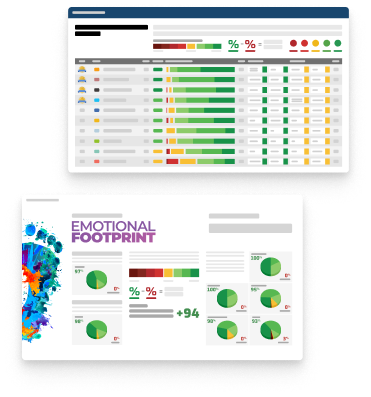
Emotional Footprint Overview
Product scores listed below represent current data. This may be different from data contained in reports and awards, which express data as of their publication date.
+92 Net Emotional Footprint
The emotional sentiment held by end users of the software based on their experience with the vendor. Responses are captured on an eight-point scale.
How much do users love Amazon Redshift?
Pros
- Enables Productivity
- Acts with Integrity
- Reliable
- Performance Enhancing
How to read the Emotional Footprint
The Net Emotional Footprint measures high-level user sentiment towards particular product offerings. It aggregates emotional response ratings for various dimensions of the vendor-client relationship and product effectiveness, creating a powerful indicator of overall user feeling toward the vendor and product.
While purchasing decisions shouldn't be based on emotion, it's valuable to know what kind of emotional response the vendor you're considering elicits from their users.
Footprint
Negative
Neutral
Positive
Feature Ratings
Distributed Processing
Data Security
Data Integration
Workload Management and Monitoring
Data Management
Platform Administration
Analytics and Data Science Tools
Analytics and Reporting
Real Time Capabilities
Metadata Management
Data Visualization
Vendor Capability Ratings
Ease of Implementation
Ease of IT Administration
Vendor Support
Business Value Created
Ease of Data Integration
Quality of Features
Breadth of Features
Usability and Intuitiveness
Availability and Quality of Training
Product Strategy and Rate of Improvement
Ease of Customization
Amazon Redshift Reviews
Abhishek P.
- Role: Information Technology
- Industry: Technology
- Involvement: Business Leader or Manager
Submitted Dec 2025
Reliable Data Warehouse That Can Evolve Further
Likeliness to Recommend
What differentiates Amazon Redshift from other similar products?
Redshift is a fully managed cloud data warehouse, meaning AWS handles infrastructure, backups, scaling, and patching. Unlike traditional on-premises warehouses (like Oracle Exadata or Teradata), you don’t need to worry about hardware, OS, or software maintenance Redshift uses a distributed, columnar architecture with Massively Parallel Processing (MPP). This allows it to process large volumes of data efficiently by splitting queries across multiple nodes. Many competitors like MySQL or PostgreSQL struggle with analytics at this scale
What is your favorite aspect of this product?
My favorite aspect of Amazon Redshift is its scalability and performance in handling large-scale data analytics. The combination of columnar storage, MPP architecture, and features like concurrency scaling makes querying massive datasets fast and efficient. I also appreciate its tight integration with the AWS ecosystem, which simplifies ETL, security, and data-sharing workflows, making it easier to manage complex analytics pipelines.
What do you dislike most about this product?
The main drawback I’ve noticed is the lack of enforcement for data constraints like unique keys or foreign keys, which can make maintaining data integrity more challenging. Additionally, handling semi-structured data (like JSON in SUPER columns) is limited, and achieving optimal performance sometimes requires manual tuning of sort keys, distribution keys, and compression. These aspects can make Redshift less flexible compared to some newer cloud data warehouses.
What recommendations would you give to someone considering this product?
I would recommend: Understand your data and queries – plan your distribution keys, sort keys, and compression carefully to optimize performance. Use Redshift’s integration with AWS services – leverage S3, Glue, Kinesis, and IAM for seamless ETL, data ingestion, and security. Be aware of limitations – Redshift does not enforce constraints and has some restrictions with semi-structured data, so plan ETL pipelines and data validation accordingly.
Pros
- Helps Innovate
- Continually Improving Product
- Reliable
- Performance Enhancing
Please tell us why you think this review should be flagged.

Fagbamigbe T.
- Role: Operations
- Industry: Finance
- Involvement: End User of Application
Submitted Jun 2025
Empowered data analytics
Likeliness to Recommend
What differentiates Amazon Redshift from other similar products?
Ability to handle both structured and semi-structured data, along with support for machine learning models.
What is your favorite aspect of this product?
Performance at scale
What do you dislike most about this product?
Complex setup
What recommendations would you give to someone considering this product?
it is worth the try
Pros
- Continually Improving Product
- Reliable
- Performance Enhancing
- Enables Productivity
Please tell us why you think this review should be flagged.
Kunal S.
- Role: Information Technology
- Industry: Technology
- Involvement: IT Leader or Manager
Submitted Oct 2024
Powerful and Scalable, but Costly.
Likeliness to Recommend
What differentiates Amazon Redshift from other similar products?
What sets Amazon Redshift apart from other similar products is its ability to handle large amounts of data quickly and efficiently. It integrates well with other AWS services, making it easier to work with various data sources. Additionally, Redshift offers features like automatic scaling and advanced security options, which help businesses manage their data more effectively. Overall, its performance, scalability, and integration capabilities make it a strong choice for data warehousing.
What is your favorite aspect of this product?
My favorite aspect of Amazon Redshift is its speed and performance when processing large datasets. It allows me to run complex queries quickly, which saves a lot of time and helps us make better data-driven decisions. The seamless integration with other AWS services is also a big plus, making it easier to manage and analyze our data.
What do you dislike most about this product?
What I dislike most about Amazon Redshift is the cost. While it offers great features and performance, the pricing can add up quickly, especially as we scale and add more resources. Additionally, some users might find the setup and configuration a bit complex, which can be a hurdle for those new to data warehousing.
What recommendations would you give to someone considering this product?
I recommend thoroughly assessing your organization's data needs and usage patterns before committing to Amazon Redshift. Make sure to take advantage of the free trial to explore its features and performance. Also, consider the costs carefully, as they can escalate with increased usage. It’s important to plan for training and support for your team, as getting familiar with the platform can take some time. Overall, if you need a powerful data warehousing solution and are prepared for the investment, Redshift can be a great choice.
Pros
- Security Protects
- Continually Improving Product
- Reliable
- Enables Productivity
Please tell us why you think this review should be flagged.




Get Instant Access<br>to this Report
Get Instant Access
to this Report
Unlock your first report with just a business email. Register to access our entire library.
© 2026 SoftwareReviews.com. All rights reserved.