

Microsoft Azure Data Factory
What is Microsoft Azure Data Factory?
Azure Data Factory is Azure's cloud ETL service for scale-out serverless data integration and data transformation. It offers a code-free UI for intuitive authoring and single-pane-of-glass monitoring and management. Data Factory provides a data integration and transformation layer that works across your digital transformation initiatives.
Company Details
Need Assistance?
We're here to help you with understanding our reports and the data inside to help you make decisions.
Get AssistanceMicrosoft Azure Data Factory Ratings
Real user data aggregated to summarize the product performance and customer experience.
Download the entire Product Scorecard
to access more information on Microsoft Azure Data Factory.
Product scores listed below represent current data. This may be different from data contained in reports and awards, which express data as of their publication date.
88 Likeliness to Recommend
1
Since last award
98 Plan to Renew
80 Satisfaction of Cost Relative to Value
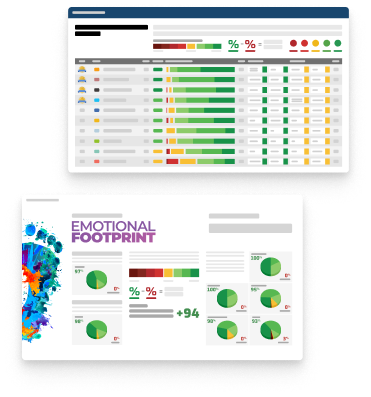
Emotional Footprint Overview
Product scores listed below represent current data. This may be different from data contained in reports and awards, which express data as of their publication date.
+92 Net Emotional Footprint
The emotional sentiment held by end users of the software based on their experience with the vendor. Responses are captured on an eight-point scale.
How much do users love Microsoft Azure Data Factory?
Pros
- Respectful
- Security Protects
- Reliable
- Saves Time
How to read the Emotional Footprint
The Net Emotional Footprint measures high-level user sentiment towards particular product offerings. It aggregates emotional response ratings for various dimensions of the vendor-client relationship and product effectiveness, creating a powerful indicator of overall user feeling toward the vendor and product.
While purchasing decisions shouldn't be based on emotion, it's valuable to know what kind of emotional response the vendor you're considering elicits from their users.
Footprint
Negative
Neutral
Positive
Feature Ratings
Data Security
Administrative Features
Batch Integration
Real Time Integration
Exception Handling and Notifications
iPaaS
Synchronization and Replication
Data Virtualization
Metadata Management
Multi Channel Support
API Management and Orchestration
Vendor Capability Ratings
Quality of Features
Business Value Created
Breadth of Features
Ease of Implementation
Ease of Data Integration
Availability and Quality of Training
Ease of IT Administration
Usability and Intuitiveness
Ease of Customization
Vendor Support
Product Strategy and Rate of Improvement
Microsoft Azure Data Factory Reviews
Raghu S.
- Role: Information Technology
- Industry: Technology
- Involvement: IT Leader or Manager
Submitted Mar 2025
Easy to use ETL tool with high customer support
Likeliness to Recommend
What differentiates Microsoft Azure Data Factory from other similar products?
For data ingestion, it can connect to multiple source like big data services files etc. You can also integrate with other azure services(like databricks, azure devops) easily.
What is your favorite aspect of this product?
It's has quite rich drag and drop features which futher require less coding skills .
What do you dislike most about this product?
Difficult to write complex transformation logic in ADF.
What recommendations would you give to someone considering this product?
Connecting with multiple data source and making transformation on it require more secure and reliable ETL tool which I think ADF is best for that.
Pros
- Respectful
- Acts with Integrity
- Helps Innovate
- Continually Improving Product
Please tell us why you think this review should be flagged.
Diana U.
- Role: Operations
- Industry: Healthcare
- Involvement: End User of Application
Submitted Mar 2025
Powerful Data Integration Tool
Likeliness to Recommend
What differentiates Microsoft Azure Data Factory from other similar products?
Microsoft Azure Data Factory (ADF) differs from other data integration and ETL solutions by its cloud-native, end-to-end managed lifecycle and deep integration with Azure. The key differences are: Seamless Azure Integration – ADF natively integrates with Azure services like Synapse Analytics, Data Lake, and Machine Learning and offers an end-to-end data workflow. Hybrid & Multi-Cloud Support – Unlike the competition, ADF has native self-hosted integration runtimes to support on-premises, multi-cloud, and hybrid data movement.
What is your favorite aspect of this product?
My favorite aspect of Azure Data Factory is the way it works perfectly with the Azure ecosystem to provide seamless data movement and transformation between services like Synapse Analytics, Data Lake, and Machine Learning. Its support for multi-cloud and hybrid makes it easy for organizations to blend on-premises, cloud, and third-party data sources seamlessly. The low-code, adaptable interface with elastic performance also makes it convenient for both technical and non-technical users, while its effective data workflows at any scale make it accessible to anyone.
What do you dislike most about this product?
One limitation of Azure Data Factory is its lack of native real-time data processing capabilities. While it excels at batch data transfer, it lacks native support for event-driven streaming, and therefore additional services like Azure Stream Analytics are required for real-time usage. Debugging and error handling can further be augmented with AI-driven troubleshooting and auto-suggested error resolution. Version control and rollbacks must also be enhanced to make it simpler to manage changes to pipelines.
What recommendations would you give to someone considering this product?
When considering Azure Data Factory (ADF), leverage its seamless Azure integration for optimal performance. If you need real-time streaming, integrate Azure Stream Analytics since ADF is batch-oriented. Monitor costs carefully to optimize pipeline execution expenses. Improve debugging with detailed logging and use Git for version control since ADF’s native versioning is limited. For hybrid or multi-cloud scenarios, utilize self-hosted integration runtimes. These strategies ensure efficient, cost-effective, and scalable data workflows.
Pros
- Helps Innovate
- Continually Improving Product
- Reliable
- Enables Productivity
Please tell us why you think this review should be flagged.

Evans F.
- Role: Information Technology
- Industry: Shipping
- Involvement: IT Development, Integration, and Administration
Submitted Feb 2025
Powerful data integration tool!
Likeliness to Recommend
What differentiates Microsoft Azure Data Factory from other similar products?
1. Seamless Integration with Azure Ecosystem: Deep integration with other Azure services like Azure Synapse, Azure Machine Learning, and Azure Blob Storage, making it ideal for organizations already using the Azure platform. 2. Hybrid Data Integration: Azure Data Factory supports both cloud-based and on-premises data integration, offering flexibility across diverse environments. 3. Advanced Orchestration and Automation: Powerful orchestration features allow for complex, automated data workflows with custom triggers and scheduling capabilities.
What is your favorite aspect of this product?
My favorite aspect of Microsoft Azure Data Factory is its seamless integration with the Azure ecosystem, which allows for smooth workflows and enhanced performance when working with other Azure services like Synapse and Machine Learning.
What do you dislike most about this product?
What I dislike most about Microsoft Azure Data Factory is its complex user interface, which can be overwhelming for new users and may require a steep learning curve to navigate effectively.
What recommendations would you give to someone considering this product?
1. Familiarize yourself with Azure services to maximize integration and performance. 2. Start with simple pipelines to get comfortable with the interface before scaling to more complex workflows. 3. Ensure you have the right infrastructure in place for smooth hybrid data integration across on-premises and cloud environments.
Pros
- Continually Improving Product
- Trustworthy
- Inspires Innovation
- Saves Time
Please tell us why you think this review should be flagged.



Get Instant Access<br>to this Report
Get Instant Access
to this Report
Unlock your first report with just a business email. Register to access our entire library.
© 2026 SoftwareReviews.com. All rights reserved.