Asana Goes Beyond Tasks: A Work Graph–Powered AI Offensive
Asana is a work management platform used to coordinate tasks, projects, goals, and cross‑functional workflows. Its new AI enhancements are embedded directly into this environment, operating within existing structures rather than functioning as a separate AI layer. Asana positions these updates under the concept of “Human‑AI Coordination,” where AI agents contribute to work in collaboration with human users.
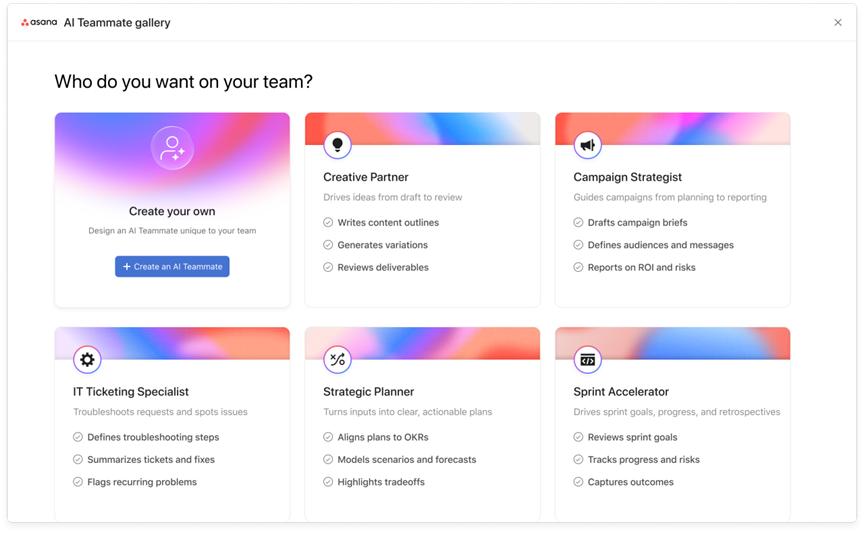
Image Source: Asana Analyst Relations
AI Teammates are the primary new feature set. They function as embedded agents within Asana projects and tasks, able to analyze information, propose actions, draft content, and break larger efforts into smaller steps.
Agent use cases mentioned by Asana:
- Marketing and Creative Operations
- IT Service/IT Ticketing
- Engineering/Product & Sprint Workflows
- Time Tracking and Reporting
- Pricing and Operational Research
Analyst Relations: During the briefing, Asana demonstrated these agents working directly inside real workflows, including the workflow that generated and scheduled the briefing itself. This practical example illustrated how Teammates interact with task fields, comments, and dependencies.
Asana also presented updates to AI Studio, its no‑code workflow automation environment. The examples shown included form data validation, routing tasks based on predefined logic, and other tightly scoped automations.
These features streamline repetitive processes for existing Asana customers but will require monitoring due to the platform’s token‑based usage model, which controls the volume of AI activity.
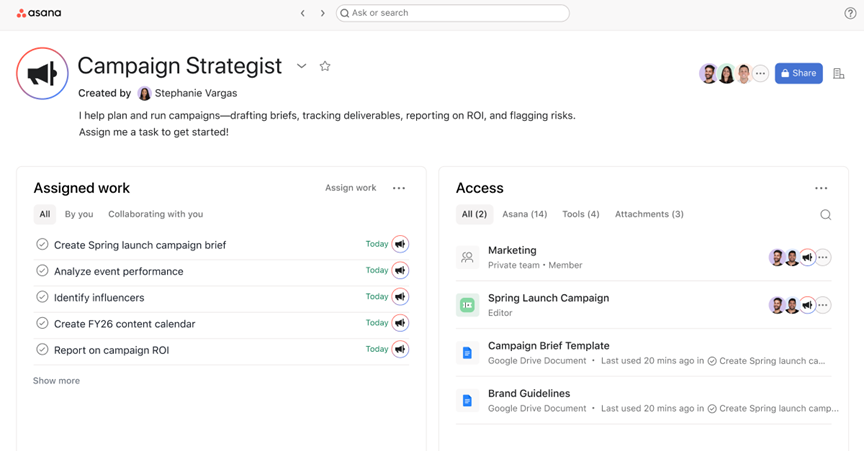
Image Source: Asana Analyst Relations
The impact of these features will depend heavily on how consistently a given organization uses Asana. Structured teams with defined workflows, up‑to‑date task data, and regular use of Asana fields are well positioned to benefit from agent‑driven automation. Teams with inconsistent usage patterns or fragmented processes may find fewer immediate gains and may need to improve workflow discipline before adopting AI Teammates at scale.
Governance Considerations
AI Teammates introduce new oversight needs for teams responsible for workflow quality, compliance, and operational risk. As these agents begin to draft content, validate inputs, and potentially initiate work, organizations must define:
• When human review or approval is mandatory.
• The boundaries of what agents are permitted to do.
• How audit logs and traceability will be maintained.
• How AI‑generated work fits into existing accountability models.
Clear governance policies are important to prevent unintended outcomes as human and AI contributions become more interdependent inside workflows.
Asana also outlined early roadmap directions, including expanded integrations, automation aligned to organizational‑level goals, and potential interactions between Asana agents and agents in other systems. An agent use case for sales enablement is being developed with Asana as customer zero. These roadmap items were presented as forward‑looking and not tied to specific timelines.
Our Take
For organizations already using Asana extensively and with consistent data structures, the new AI capabilities may enable targeted automation, best introduced using small, supervised pilots that validate reliability, user experience, and governance requirements.
For organizations still evaluating work‑management platforms, these updates provide a timely opportunity to compare emerging AI features across the ecosystem.
Organizations considering Asana’s AI features should begin with a single repetitive, well‑defined workflow to assess performance, accuracy, and governance impacts. Structured usage is important: AI Teammates require reliable task data and consistent workflow patterns to operate effectively. Cost controls should also be established, especially regarding token‑based AI consumption.
Governance frameworks related to approval, auditability, and accountability will be essential. Teams should determine how AI‑generated work is reviewed and how responsibility is assigned when work is completed jointly by humans and AI.
The briefing also showed that Asana now enables users to build their own agents within platform guardrails, which may be attractive for organizations seeking to expand automation without adding separate tools. For teams evaluating productivity or workflow systems more broadly, the decision should align with the organization’s long‑term automation strategy whether they prefer built‑in agents tied to an existing system or an external agent platform integrated across multiple tools.
Want to Know More?
Asana Customer Reviews 2026 | Project Management - Enterprise