.png)
OpenText Core Service Management
What is OpenText Core Service Management?
OpenText Core Service Management Premium (formerly OpenText SMAX) is a native cloud application that delivers a machine learning based service management and asset management capability for customers with options for automated discovery of servers, software, and service models via Micro Focus Universal Discovery and CMDB (comprising of “Universal Discovery” and “UCMDB”) and automation with Micro Focus Operations Orchestration SaaS (“Operations Orchestration”).
Company Details
Need Assistance?
We're here to help you with understanding our reports and the data inside to help you make decisions.
Get AssistanceOpenText Core Service Management Ratings
Real user data aggregated to summarize the product performance and customer experience.
Download the entire Product Scorecard
to access more information on OpenText Core Service Management.
Product scores listed below represent current data. This may be different from data contained in reports and awards, which express data as of their publication date.
85 Likeliness to Recommend
1
Since last award
98 Plan to Renew
74 Satisfaction of Cost Relative to Value
3
Since last award
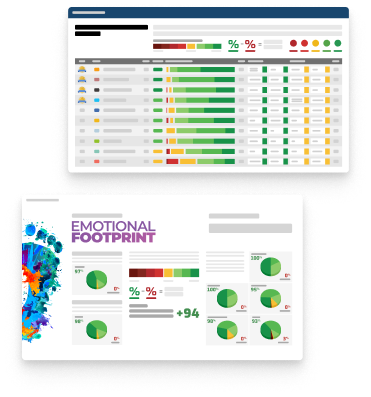
Emotional Footprint Overview
Product scores listed below represent current data. This may be different from data contained in reports and awards, which express data as of their publication date.
+88 Net Emotional Footprint
The emotional sentiment held by end users of the software based on their experience with the vendor. Responses are captured on an eight-point scale.
How much do users love OpenText Core Service Management?
Pros
- Reliable
- Respectful
- Fair
- Security Protects
How to read the Emotional Footprint
The Net Emotional Footprint measures high-level user sentiment towards particular product offerings. It aggregates emotional response ratings for various dimensions of the vendor-client relationship and product effectiveness, creating a powerful indicator of overall user feeling toward the vendor and product.
While purchasing decisions shouldn't be based on emotion, it's valuable to know what kind of emotional response the vendor you're considering elicits from their users.
Footprint
Negative
Neutral
Positive
Feature Ratings
Business Application Integration
Technician Administration
Integration With IT Tools
End User Self Serve
Multi Device Capability
Service Catalog
Systems Management Integration
End User Support Solutions
Integrated Knowledge Management
Reporting
Multi-Site Functionality
Vendor Capability Ratings
Ease of Data Integration
Ease of IT Administration
Ease of Implementation
Product Strategy and Rate of Improvement
Vendor Support
Usability and Intuitiveness
Breadth of Features
Ease of Customization
Availability and Quality of Training
Quality of Features
Business Value Created
OpenText Core Service Management Reviews
Selvam R.
- Role: Information Technology
- Industry: Technology
- Involvement: IT Development, Integration, and Administration
Submitted Jan 2026
Good and easy to use in the cloud.
Likeliness to Recommend
What differentiates OpenText Core Service Management from other similar products?
It’s a cloud service tool that’s easy to use. It works well with other OpenText products and fits many business needs.
What is your favorite aspect of this product?
Favorite part is the ITSM features, specially how it helps track and resolve tickets quickly
What do you dislike most about this product?
One area that could be improved is adding more advanced automation and reporting, but overall it’s still a solid ITSM tool.
What recommendations would you give to someone considering this product?
If you need a cloud-based ITSM tool that’s easy to use and integrates well with other OpenText products, it’s a good choice.
Pros
- Performance Enhancing
- Efficient Service
- Effective Service
- Respectful
Please tell us why you think this review should be flagged.

Rekha G.
- Role: Operations
- Industry: Technology
- Involvement: End User of Application
Submitted Jan 2026
Powerful ITSM with codeless flexibility
Likeliness to Recommend
What differentiates OpenText Core Service Management from other similar products?
A codeless configuration approach means you can tailor workflows and service apps without writing code. This reduce dependency on expensive developer resources and makes upgrades easier because customization are less likely to break .
What is your favorite aspect of this product?
Teams can extend or adjust service processes quickly in response to evolving business needs.
What do you dislike most about this product?
Customer often mention that creating dashboard and reports is not as easy or flexible as they did like .
What recommendations would you give to someone considering this product?
Initial setup can be complex many users find that the first phase of deployment challenging and may need consultant assistance.
Pros
- Helps Innovate
- Trustworthy
- Respectful
- Client's Interest First
Cons
- Commodity Features
- Less Efficient Service
- Leverages Incumbent Status
Please tell us why you think this review should be flagged.

Neha P.
- Role: Information Technology
- Industry: Technology
- Involvement: IT Development, Integration, and Administration
Submitted Jan 2026
solid and streamlined cloud option.
Likeliness to Recommend
What differentiates OpenText Core Service Management from other similar products?
OpenText Core Service Management apart is its strong integration with the broader ecosystem of enterprise content management and business processes. Unlike many standalone service desk tools, it is fundamentally connected to OpenText's powerful content suite. This means service tickets, knowledge articles, and workflows can natively interact with critical business documents, compliance records, and other structured information stored across the organization. This deep connection allows it to excel in environments where service management is deeply intertwined with document-centric processes, such as handling customer contracts, support cases.
What is your favorite aspect of this product?
OpenText Core Service Management is how effectively it bridges the gap between powerful functionality and genuine accessibility. The platform takes the robust, enterprise-grade capabilities you would expect from an OpenText product, particularly its strong roots in ITIL processes, and delivers them through a surprisingly intuitive and modern cloud interface. What stands out is that it doesn't force you to choose between sophistication and ease of use. Setting up service catalogs, managing incidents, or configuring automated workflows feels streamlined, which is a huge plus for teams that need to get up and running quickly without sacrificing.
What do you dislike most about this product?
I find most challenging with OpenText Core Service Management is its overall user experience and navigation. The interface can feel somewhat dated and unintuitive compared to more modern, consumer-like SaaS platforms, which often leads to a steeper learning curve for new team members. Finding specific settings or features isn't always straightforward, and the general feel can be clunky at times. This extends to the administrative side as well, where certain configurations feel more complex than they should be, potentially slowing down initial setup and ongoing adjustments.
What recommendations would you give to someone considering this product?
OpenText Core Service Management, my main advice is to honestly assess your organization's existing relationship with the OpenText ecosystem. If you are already heavily invested in their other enterprise content management or business process tools, this platform can be a logical and integrated extension, potentially simplifying your overall architecture. I would recommend taking a close look at the specific workflows and IT service management processes it supports out of the box to ensure they align well with your internal needs.
Pros
- Effective Service
- Saves Time
- Fair
- Altruistic
Cons
- Inhibits Innovation
- Less Productive
- Commodity Features
Please tell us why you think this review should be flagged.


Get Instant Access<br>to this Report
Get Instant Access
to this Report
Unlock your first report with just a business email. Register to access our entire library.
© 2026 SoftwareReviews.com. All rights reserved.