
What is AWS Machine Learning?
Amazon Machine Learning is an Amazon Web Services product that allows a developer to discover patterns in end-user data through algorithms, construct mathematical models based on these patterns and then create and implement predictive applications.
Company Details
Need Assistance?
We're here to help you with understanding our reports and the data inside to help you make decisions.
Get AssistanceAWS Machine Learning Ratings
Real user data aggregated to summarize the product performance and customer experience.
Download the entire Product Scorecard
to access more information on AWS Machine Learning.
Product scores listed below represent current data. This may be different from data contained in reports and awards, which express data as of their publication date.
88 Likeliness to Recommend
92 Plan to Renew
81 Satisfaction of Cost Relative to Value
1
Since last award
Emotional Footprint Overview
Product scores listed below represent current data. This may be different from data contained in reports and awards, which express data as of their publication date.
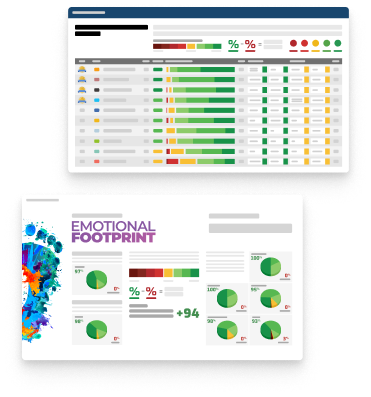
+92 Net Emotional Footprint
The emotional sentiment held by end users of the software based on their experience with the vendor. Responses are captured on an eight-point scale.
How much do users love AWS Machine Learning?
Pros
- Efficient Service
- Respectful
- Reliable
- Effective Service
How to read the Emotional Footprint
The Net Emotional Footprint measures high-level user sentiment towards particular product offerings. It aggregates emotional response ratings for various dimensions of the vendor-client relationship and product effectiveness, creating a powerful indicator of overall user feeling toward the vendor and product.
While purchasing decisions shouldn't be based on emotion, it's valuable to know what kind of emotional response the vendor you're considering elicits from their users.
Footprint
Negative
Neutral
Positive
Feature Ratings
Pre-Packaged AI/ML Services
Performance and Scalability
Data Pre-Processing
Openness and Flexibility
Algorithm Diversity
Feature Engineering
Model Tuning
Data Labeling
Model Training
Algorithm Recommendation
Data Ingestion
Vendor Capability Ratings
Quality of Features
Ease of Data Integration
Business Value Created
Vendor Support
Breadth of Features
Ease of Implementation
Product Strategy and Rate of Improvement
Ease of Customization
Ease of IT Administration
Usability and Intuitiveness
Availability and Quality of Training
AWS Machine Learning Reviews

Jake W.
- Role: Information Technology
- Industry: Technology
- Involvement: IT Development, Integration, and Administration
Submitted Mar 2026
Reliable Machine Learning Platform
Likeliness to Recommend
What differentiates AWS Machine Learning from other similar products?
Architectural flexibility is the real differentiator. It also stands out by offering a multi-vendor model marketplace via a single API that allows us to switch between models from Anthropic Meta Mistral and Amazon without changing code, and this all comes under the feature called Amazon Bedrock.
What is your favorite aspect of this product?
What I find most compelling about the AWS Machine Learning ecosystem is its ability to meet my needs, whether there is a need of high level simplicity of an API or the granular control of custom silicon. Having a single source of truth for data and models protected by mature security like Bedrock Guardrails makes it much easier to move from a cool experiment to a compliant production-ready application.
What do you dislike most about this product?
Features like Bedrock Knowledge Bases are black boxes. They offer simplicity but lock into specific chunking and retrieval strategies, which defeats the purpose of using a managed platform in the first place.
What recommendations would you give to someone considering this product?
I would recommend you use the integrated Amazon Q assistant within the IDE or the AWS Console, as it is specifically tuned to help with architecture recommendations and can automate much of the boilerplate code needed to connect S3 buckets to ML pipelines.
Pros
- Continually Improving Product
- Reliable
- Performance Enhancing
- Enables Productivity
Please tell us why you think this review should be flagged.

Aman k.
- Role: Information Technology
- Industry: Technology
- Involvement: IT Development, Integration, and Administration
Submitted Dec 2025
Scalable, reliable ML platform.
Likeliness to Recommend
What differentiates AWS Machine Learning from other similar products?
AWS Machine Learning stands out because it integrates smoothly across the entire AWS ecosystem. You can go from data ingestion to model deployment without changing platforms, which saves a lot of time. The ability to train and deploy models on large datasets without worrying about infrastructure is also a significant advantage. The continuous pace of innovation, particularly with their integrations across AI and serverless services, keeps the platform ahead of many competitors.
What is your favorite aspect of this product?
My favorite aspect is how easy it is to scale experiments from small prototypes to full production workloads. SageMaker takes care of a lot of the hard work, including training jobs, tuning, and deployment. This allows me to focus more on the actual modeling work instead of worrying about the infrastructure. The ability to integrate with other AWS services is also very helpful.
What do you dislike most about this product?
The biggest drawback is that some features can feel complicated or need several steps to set up. The learning curve is steep, especially for those who are new to AWS. Some parts of the interface could be easier to navigate, and handling all the permissions across services can become confusing at times.
What recommendations would you give to someone considering this product?
I recommend spending some time understanding the main AWS services before exploring the ML tools. This will make the experience much smoother. Start small and experiment with the built-in notebooks. Gradually move toward production workflows. If your team works with large datasets or needs dependable scaling, AWS ML is a good choice. Just be ready to invest some time upfront to learn the platform well.
Pros
- Helps Innovate
- Continually Improving Product
- Reliable
- Performance Enhancing
Please tell us why you think this review should be flagged.

Aakanksha K.
- Role: Information Technology
- Industry: Technology
- Involvement: IT Development, Integration, and Administration
Submitted Oct 2025
Powerful and Comprehensive ML Platform
Likeliness to Recommend
What differentiates AWS Machine Learning from other similar products?
The differences are its end-to-end coverage of the ML lifecycle, from data preparation to deployment. Its deep integration with AWS services like S3, Lambda, Redshift, and Glue makes workflows seamless and scalable. The platform offers flexibility to use custom models and multiple frameworks like TensorFlow, PyTorch, and Scikit-learn, while providing pre-built AI/ML services like Rekognition, Comprehend, and Bedrock for rapid deployment. Strong security, enterprise-grade compliance, and continuous innovation further set it apart, making it a versatile solution for both experimentation and production workloads.
What is your favorite aspect of this product?
My favorite aspect of AWS Machine Learning is how seamlessly it integrates with services like S3, Lambda, and SageMaker, making the entire process of building, training, and deploying models smooth and efficient. I also love its flexibility — whether using pre-built AI tools or custom ML frameworks, it gives both beginners and experts the freedom to experiment, innovate, and scale effortlessly.
What do you dislike most about this product?
What I dislike most about AWS Machine Learning is its complex pricing structure. It can be difficult to estimate total costs since charges depend on multiple factors like compute time, data storage, and specific service usage. Additionally, the platform’s vast range of tools can be overwhelming for beginners, requiring a steep learning curve before you can use it effectively. Better cost visibility and simplified onboarding would make the experience much smoother.
What recommendations would you give to someone considering this product?
If you’re considering AWS Machine Learning, I’d recommend starting small — experiment with AWS SageMaker first to understand the workflow and pricing model. Take advantage of AWS’s documentation and training resources; they’re extremely helpful for getting comfortable with the ecosystem. Make sure you plan your architecture and cost strategy in advance, as pricing can add up quickly depending on your usage. Also, integrate with other AWS services like S3 and Lambda for maximum efficiency. Overall, AWS ML is a powerful and scalable platform — perfect if you want flexibility, security, and enterprise-level performance.
Pros
- Continually Improving Product
- Reliable
- Security Protects
- Helps Innovate
Please tell us why you think this review should be flagged.





Get Instant Access<br>to this Report
Get Instant Access
to this Report
Unlock your first report with just a business email. Register to access our entire library.
© 2026 SoftwareReviews.com. All rights reserved.