
What is Asana?
With tasks, projects, conversations and dashboards, Asana enables teams to move work from start to finish.
Company Details
Need Assistance?
We're here to help you with understanding our reports and the data inside to help you make decisions.
Get AssistanceAsana Ratings
Real user data aggregated to summarize the product performance and customer experience.
Download the entire Product Scorecard
to access more information on Asana.
Product scores listed below represent current data. This may be different from data contained in reports and awards, which express data as of their publication date.
90 Likeliness to Recommend
96 Plan to Renew
87 Satisfaction of Cost Relative to Value
Emotional Footprint Overview
Product scores listed below represent current data. This may be different from data contained in reports and awards, which express data as of their publication date.
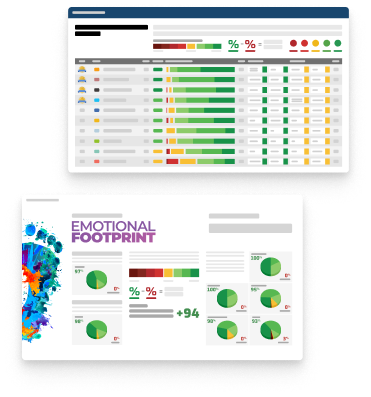
+94 Net Emotional Footprint
The emotional sentiment held by end users of the software based on their experience with the vendor. Responses are captured on an eight-point scale.
How much do users love Asana?
Pros
- Enables Productivity
- Fair
- Helps Innovate
- Reliable
How to read the Emotional Footprint
The Net Emotional Footprint measures high-level user sentiment towards particular product offerings. It aggregates emotional response ratings for various dimensions of the vendor-client relationship and product effectiveness, creating a powerful indicator of overall user feeling toward the vendor and product.
While purchasing decisions shouldn't be based on emotion, it's valuable to know what kind of emotional response the vendor you're considering elicits from their users.
Footprint
Negative
Neutral
Positive
Feature Ratings
Product Management
Workflow Management
Feature Management
ALM Integration
Social Collaboration
Backlog Management
Release Planning
Strategic Vision
Idea Management
User Needs Management
Visual Roadmap
Vendor Capability Ratings
Ease of Implementation
Business Value Created
Breadth of Features
Usability and Intuitiveness
Ease of Data Integration
Quality of Features
Product Strategy and Rate of Improvement
Ease of Customization
Availability and Quality of Training
Ease of IT Administration
Vendor Support
Also Featured in...
Asana Reviews

Mouloukou K.
- Role: Consultant
- Industry: Education
- Involvement: End User of Application
Submitted Nov 2025
The best tool for those looking to integrate
Likeliness to Recommend
What differentiates Asana from other similar products?
The tool is complete and the Kanban style view for task management is important to me. Furthermore, it integrates with many more tools making it a more viable option for future growth.
What is your favorite aspect of this product?
The app and desktop integrate nicely and picking up from one version is seamless unlike othera that are not as intuitive
What do you dislike most about this product?
The UI is not very nice or even dated in my opinion especially vs tools like Click up
What recommendations would you give to someone considering this product?
Work on the UI and make it less cluttered for easy navigation.
Pros
- Fair
- Reliable
- Performance Enhancing
- Trustworthy
Cons
- Less Effective Service
- Less Friendly Negotiation
Please tell us why you think this review should be flagged.

Varsha S.
- Role: Information Technology
- Industry: Finance
- Involvement: End User of Application
Submitted Sep 2025
Structured project and task management platform.
Likeliness to Recommend
What differentiates Asana from other similar products?
Asana has been one of the best project and task management tool we use as a team member to organize, track and manage our workforce easily. Its great because it helps us to monitor task progress with status updates and checklists. It's simple to organize projects into tasks and subtasks. Its easy to assign tasks to team members and set deadlines and priorities.
What is your favorite aspect of this product?
I like the automation workflow which helps us to automate repetitive tasks with rules. I like the user-friendly, clean, intuitive and easy-to-use interface makes onboarding experience phenomenal and easy.
What do you dislike most about this product?
My only concern is lack of built in time tracking which requires third-party integration.
What recommendations would you give to someone considering this product?
Highly recommend for it's collaboration, flexibility, integration and automation.
Pros
- Helps Innovate
- Performance Enhancing
- Enables Productivity
- Trustworthy
Please tell us why you think this review should be flagged.

Sandip D.
- Role: Information Technology
- Industry: Technology
- Involvement: End User of Application
Submitted Aug 2025
i love the different project views.
Likeliness to Recommend
What differentiates Asana from other similar products?
most tools only show you a list of tasks. asana is the best because it lets you see your project in different ways - as a list, as a kanban board, or as a calendar.
What is your favorite aspect of this product?
i am a very visual person, so i love using the board view. it helps me to see the progress of our project very clearly. my manager loves the calendar view to see all the deadlines.
What do you dislike most about this product?
switching between the different views can be a little slow sometimes.
What recommendations would you give to someone considering this product?
it is great that everyone on the team can choose the view that works best for them.
Pros
- Helps Innovate
- Continually Improving Product
- Reliable
- Performance Enhancing
Please tell us why you think this review should be flagged.



Get Instant Access<br>to this Report
Get Instant Access
to this Report
Unlock your first report with just a business email. Register to access our entire library.
© 2026 SoftwareReviews.com. All rights reserved.